Wireless Connectivity Performance in Smart Water Metering
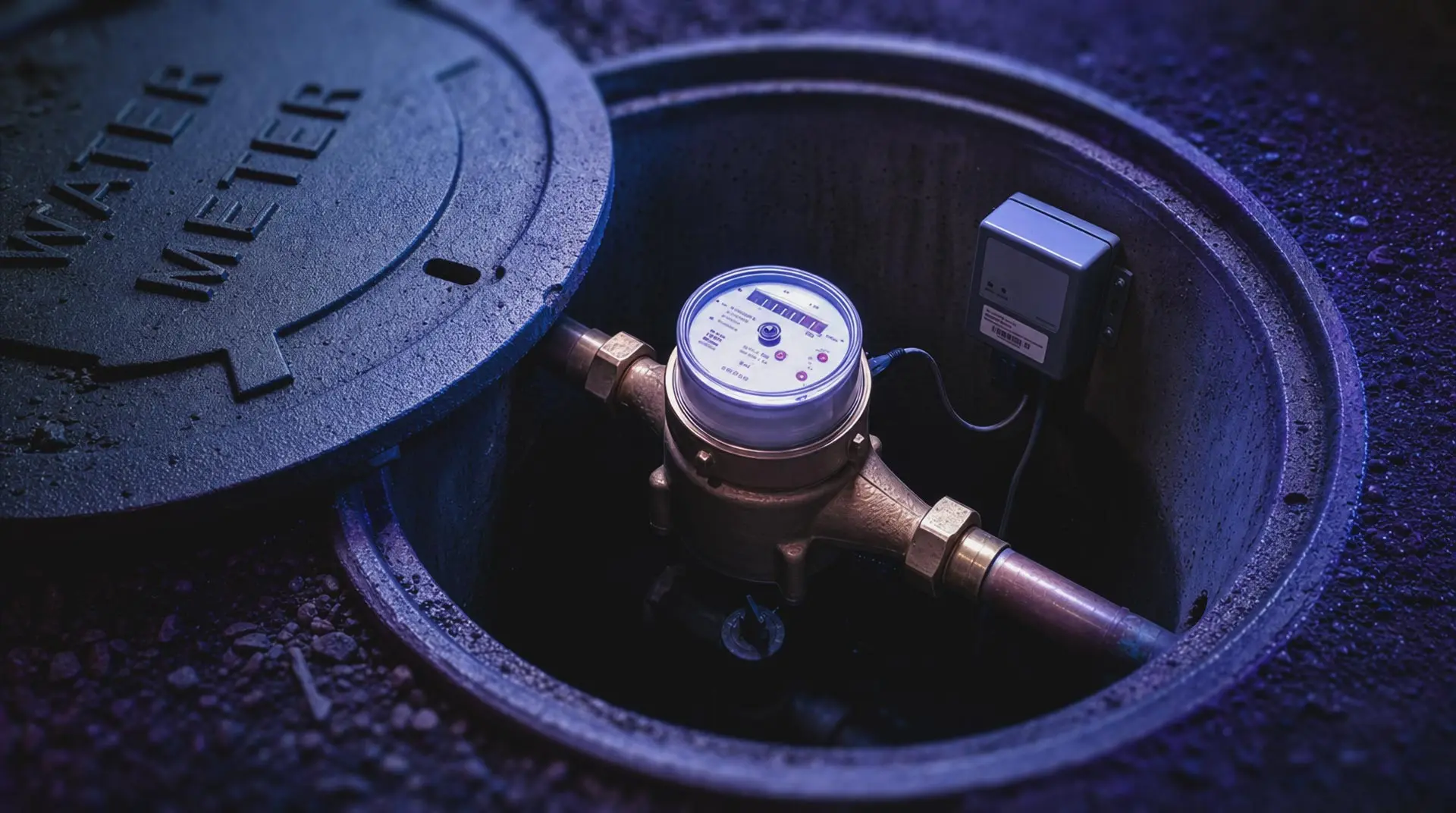
Smart water metering has evolved from automated billing to continuous network monitoring. Modern Advanced Metering Infrastructure (AMI) enables utilities to collect hourly consumption data, detect leaks, monitor continuous flow, identify reverse flow and tamper events, and perform remote diagnostics. Reliable wireless connectivity is therefore essential for both operational efficiency and reducing non-revenue water (NRW).
Cellular technologies such as NB-IOT and CAT-M typically operate in sub-GHz LTE bands, including band 8(900MHz), band 20(800MHz) for EU and band 5 (850MHz), band 12 (700MHz), band 13(700MHz) for US, where improved propagation enables reliable communication from underground chambers, boundary boxes and other difficult installation environments. The trade-off is antenna design. At Sub-GHz frequencies, achieving high efficiency with limited PCB area of compact water meter requires antenna selection, adequate ground plane dimensions and optimised PCB integration.
Cellular LPWAN for Smart Water Metering
Many smart water meters now use NB-IoT (EU) or CAT-M (N.A.), both standardised by 3GPP for low-power IoT applications.
Typical NB-IoT characteristics include:
| Parameter | NB-IOT | CAT-M |
| Operating bandwidth | 180 kHz | 1.4 MHz |
| Maximum transmit power | 23 dBm | 23 dBm |
| Maximum Coupling Loss (MCL) | 164 dB | 155-160 dB |
| Battery lifetime | 10–20 years | 10-15 years |
The high MCL enables reliable communication from difficult locations such as underground chambers or indoor installations. However, this link budget is only achieved if the RF system is carefully optimised.
Link Budget Depends on Antenna Performance
Every decibel lost between the modem and free space reduces the available system margin.
Typical sources of RF loss include:
- Antenna impedance mismatch
- Detuned antenna
- Limited PCB ground plane*
- Metal pipework close to the antenna
- Concrete chambers and meter boxes
- Detuning caused by the final enclosure
An additional 3 dB of system loss reduces the available RF power by approximately 50%. Recovering only 2–3 dB through improved antenna efficiency can significantly increase communication reliability in challenging installations.
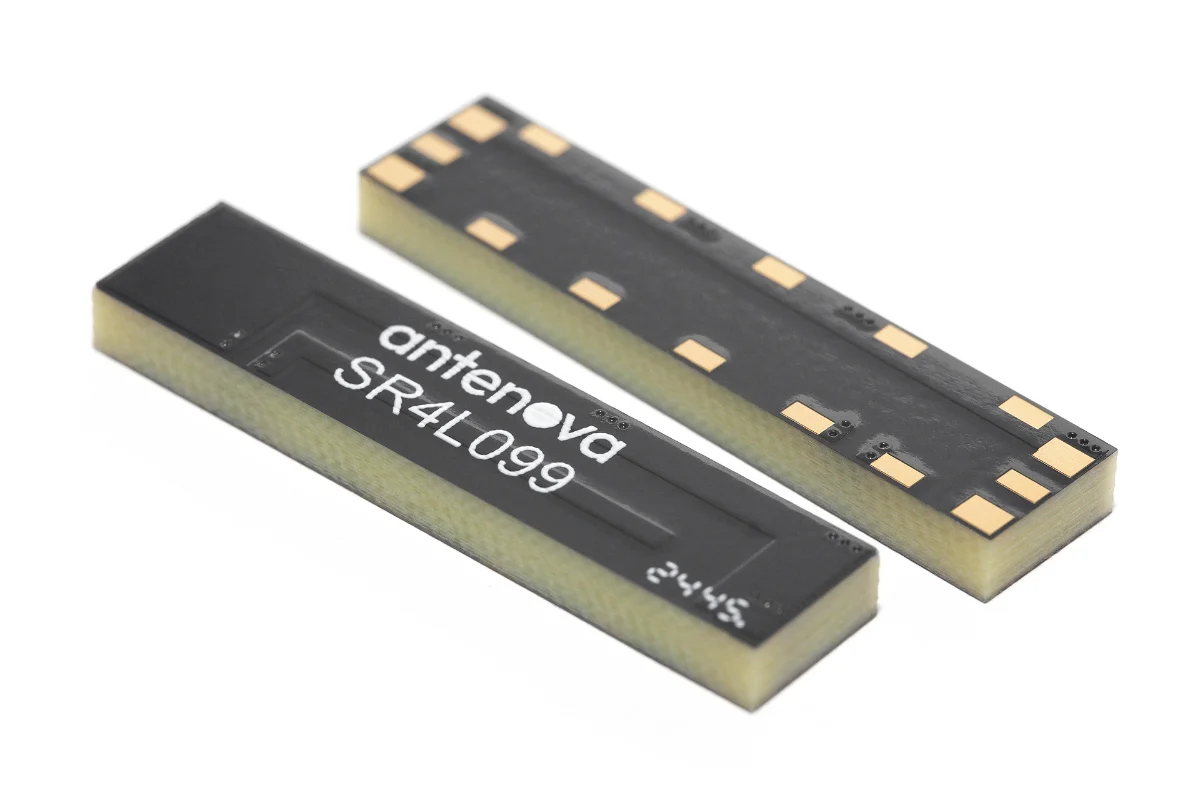
This can be achieved by selecting a high efficiency antenna such as Antenova’s Inpai, optimising its position on the PCB, providing the recommended 100mm reference ground plane for sub-GHz operation and maintaining sufficient clearance from metal components and batteries.
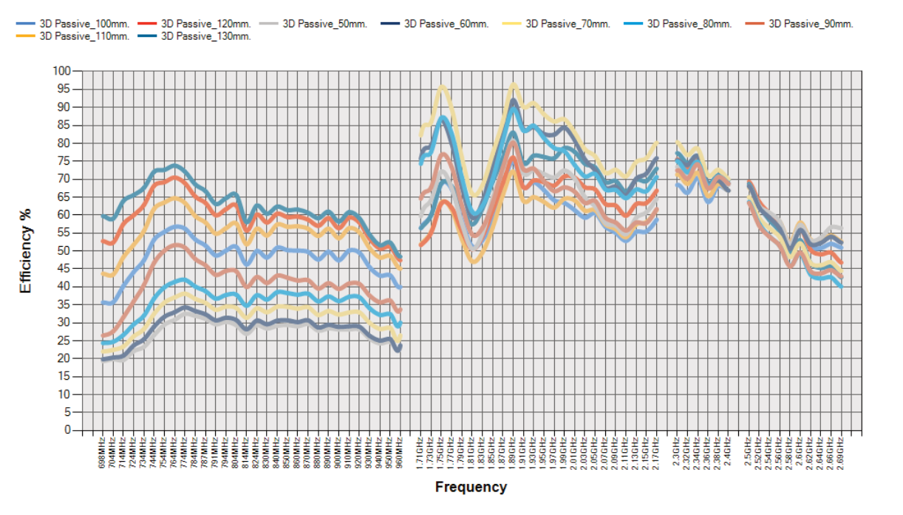
Inpai Antenna Efficiency Graph
Battery Life and Retransmissions
Most smart water meters are expected to operate maintenance-free for 15–20 years using a single lithium battery.
A meter transmitting one reading every hour generates over 210,000 uplink transmissions during a 10-year deployment, excluding acknowledgements, firmware updates and alarm messages. Leak detection, reverse flow events and tamper alarms further increase communication activity.
Poor antenna efficiency reduces received signal strength, increasing the probability of retransmissions. Although each retry consumes only a small amount of additional energy, the cumulative effect across hundreds of thousands of transmissions can significantly reduce battery life.
For example, two meters using the same 23 dBm NB-IoT/CAT-M modem but antennas with efficiencies of 70% and 35% differ by more than 3 dB in effective radiated power. That difference may determine whether a transmission succeeds on the first attempt or requires multiple retries.
Antenna Integration for Water Meter Applications
Smart water meters typically provide limited PCB area while placing the antenna close to batteries, metal pipework and compact enclosures. These constraints make antenna placement more critical than in many other IoT devices.
The antenna should be integrated as part of the complete RF system rather than treated as a standalone component. Ground plane dimensions, component placement, enclosure materials and matching network optimisation all influence final performance.
Validation using Over-the-Air (OTA) testing and tuning in the finished enclosure ensures the antenna performs under real installation conditions rather than only on a reference evaluation board.
Summary
Modern smart water meters rely on reliable LPWAN connectivity to support automated billing, leak detection and network monitoring. While NB-IoT and CAT-M provide excellent coverage, overall system performance depends on preserving every decibel of the available link budget.
Optimising antenna efficiency, minimising RF losses and validating performance in the final installation environment improves communication reliability, reduces retransmissions and helps achieve the long battery life expected from today's smart water metering systems.
Talk to Our Antenna Experts
Visit our Product Detail Pages where you will find datasheet, footprint, and 3D models. In addition, you can request a sample and a quote, check distributor availability, and try out the Antenna Placement Tool.
Need support with antenna integration or looking for a custom solution? Our engineering teams are ready to help with design, optimisation, testing, and sample selection for your wireless project. Let´s talk about your request.
or Join our global antennas & wireless design community at ask.antenova forum. This is an opportunity to communicate directly with our top engineers as well as community members.
View related articles:
Smart Infrastructure & Utilities
Optimal Wireless Connectivity Improves Performance in Smart Metering
How to enhance and guarantee the range of smart meter applications