Techniques to Integrate an Antenna on a Metal surface
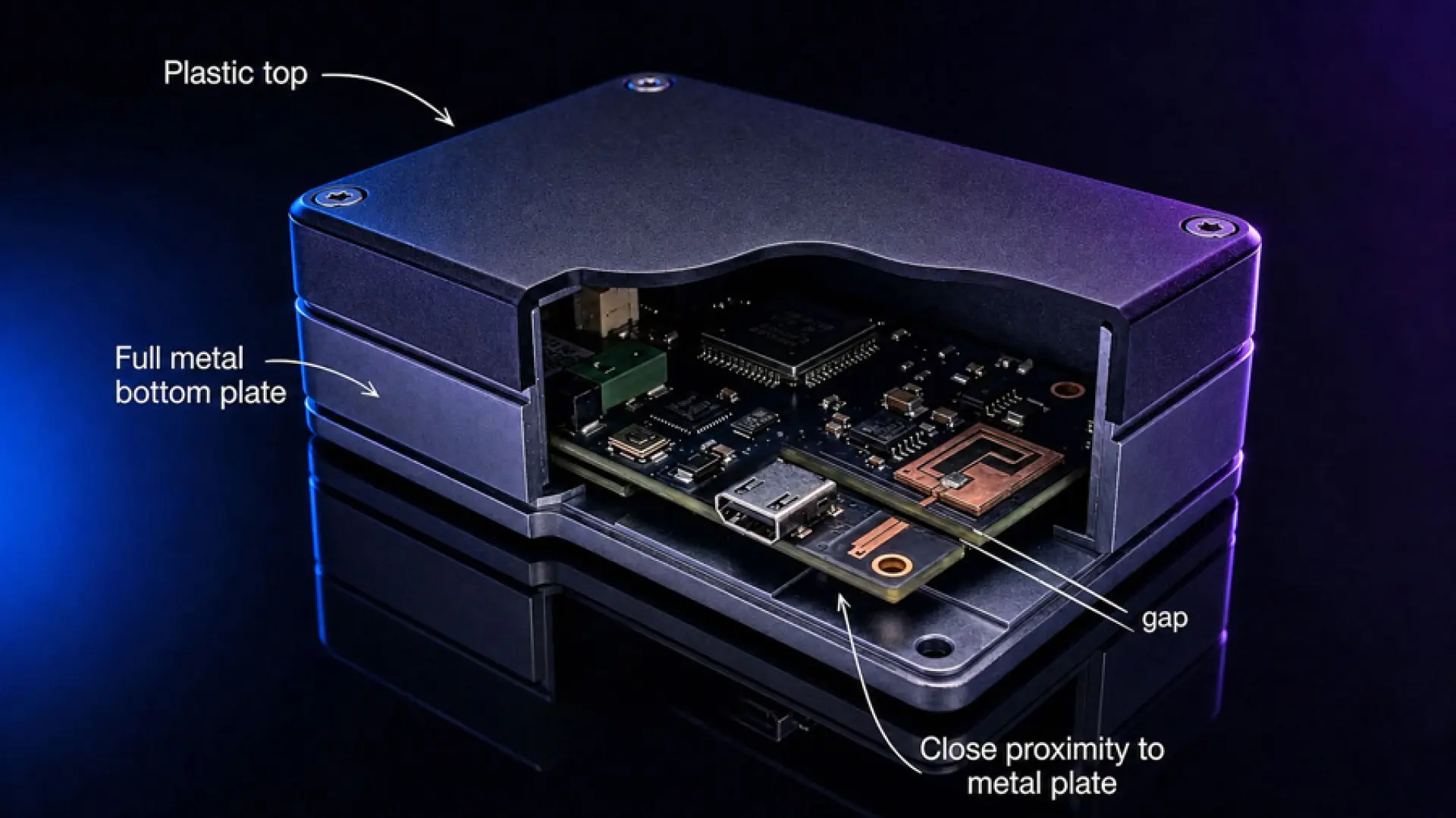
All antennas will become detuned when mounted near metal, the detuning also affects the antenna impedance. For transmitters, the change in impedance affects the antenna return loss, causing a reduction in efficiency. However, by choosing antennas optimized for operation on metal, can be made to work. In addition, the antenna placement and design layout will determine performance. This article describes several techniques to counter the effects of metal. Each technique brings design challenges to consider.
1. Integrate a PIFA (Planar Inverted F Antenna) into the design
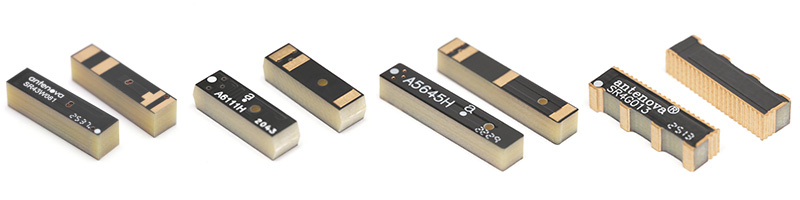
Standard PCB and chip antennas are not designed to operate near large conductive structures. When used in metal enclosures, their performance becomes unpredictable and highly sensitive to layout and assembly. This leads to inconsistent tuning and poor repeatability. An antenna will ‘couple’ into nearby metal, which reduces antenna efficiency. A PIFA (Planar Inverted F Antenna) is designed to work on top of a ground plane.
Follow the links to the product details page for specifications, 3D model, and footprint of the PIFA antennas listed below:
- Petrosa SR43W081 (WiFi 6E/7 bands & 2.4GHz+5GHz bands)
- Comata A6111H (2.4GHz SMD antenna)
- Mica A5645H (2.4GHz SMD antenna)
- Beltii SR4G013 (GNSS L1 SMD antenna)
2. Create a Controlled RF Escape Path
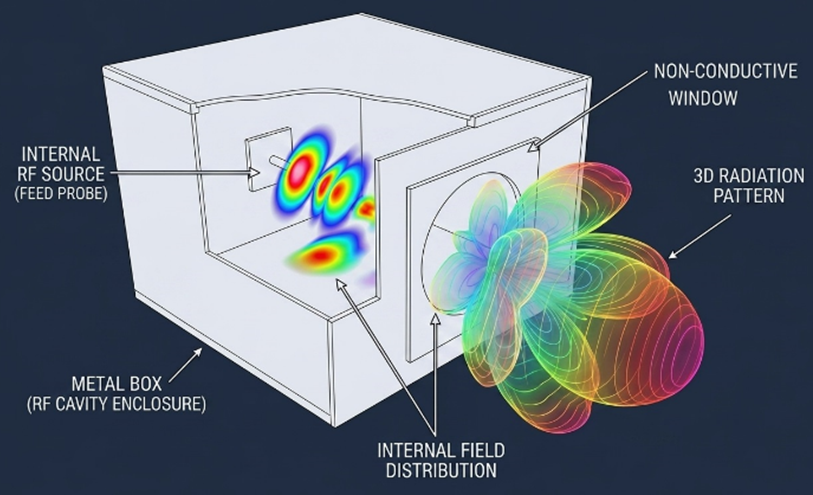
Some IoT (Internet of Things) devices have a metal enclosure to provide high durability in tough environments. A fully enclosed metal housing behaves like a Faraday cage, confining RF energy and severely reducing radiation efficiency.
The design approach is to add an RF window (plastic section or slot) near the antenna. The gap, slit or window enables the antenna to operate. This ‘window' should be at least half-wavelength in dimensions, and preferably as large as possible. The opening size should be maximized wherever mechanically possible, since larger apertures significantly reduce enclosure, induced loss, and improve radiation efficiency.
3. Mount a Reflector antenna to the enclosure
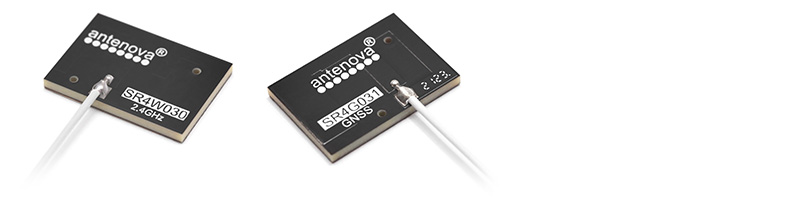
The Antenova ‘Reflector’ range features a ferrite-like layer isolating antenna layers forming a multilayer antenna. These provide high levels of performance on applications such as bicycle frames, light fixtures and utility meters. These applications require some flexibility in internal design and layout to connect the antenna.
Multilayer antennas are mounted on the exterior of metal enclosures with minimal impedance mismatching, and without being detuned. They work better than an embedded antenna on metal and have similar performance to an embedded antenna in free space. They are also much easier to conceal than external antennas, since they are very low profile.
Follow the links to the product details page for specifications and 3D model of the "Reflector" antennas are listed below:
4. Isolate the Antenna from the Metal (More Distance = Higher Efficiency)
Metal in close proximity to the antenna absorbs energy, detunes resonance, and affects radiation. In compact designs, antennas are often placed too close to conductive surfaces, leading to significant efficiency loss. These proximity effects dominate performance in metal enclosures.
The design approach is to maximize the distance between antenna and metal surfaces by using the following: Air gaps, Plastic standoffs, Foam. Avoid placing antennas directly on a metal backed PCB.
Metal proximity can result in a typical efficiency loss of 3-10 dB. Clearance guidelines:
<10 mm → severe loss, 10–15 mm → workable, >15 mm → reduced coupling to metal
5. Control Unintended Coupling to the Enclosure
In metal enclosures, the antenna doesn’t just radiate, it also couples energy into the surrounding structure, metal surfaces also block and scatter RF signals. This alters current paths, distorts radiation patterns, and introduces unpredictable losses. Without controlling this coupling, performance becomes highly sensitive to layout and mechanical variation.
The design approach is to treat the enclosure as part of the RF system and control how energy couples to it. Minimize coupling paths near the antenna feed and radiator, and use layout techniques to confine RF currents to intended paths:
Keep antennas away from shield cans and grounded metal walls/screws.
Add ground stitching vias around feed region to localize return currents.
A placement rule for vias is to keep the via stitching spacing between λ/20 and λ/10, of the highest frequency of interest.
Conclusion
Metallic enclosures pose antenna integration challenges to engineers. There are a range of possible solutions as described. If your device is large, with plenty of space between antenna and enclosure, a window may suffice. A PIFA is a good option for designs where the antenna needs to be placed on metal. Antenova recently developed the Petrosa PIFA covering the 2.4/5GHz and WiFi7 bands. Antenova offers a host of support materials to add to your knowledge base. In addition, you can request a sample and a quote, check distributor availability, and try out the Antenna Placement Tool.
Talk to Our Antenna Experts
Need support with antenna integration or looking for a custom solution? Our engineering teams are ready to help with design, optimisation, testing, and sample selection for your wireless project. Let´s talk about your request.
or Join our global antennas & wireless design community at ask.antenova forum. This is an opportunity to communicate directly with our top engineers as well as community members.
View related articles:
Maximising Antenna Performance on Small PCBs
Wireless Antennas: The Comparison Guide
The Complete Guide to Selecting an Antenna To Meet Your Specification