Antennas for LPWAN, NB-IoT and LTE-M

Low-power wide access networks
LPWANs (Low-Power Wide Access Networks) represent a wireless solution for mass IoT networks that require both connectivity range and power efficient antennas. But what are the specific technologies surrounding LPWAN, and what are the best types of LPWAN antennas?
What is LPWAN ?
LPWAN is a wireless network technology that is designed for low-power IoT applications. It consists of a star topology, which means all devices connect to a central access point or base station, similar to a cell tower for cellular technologies. There are a range of LPWAN technologies that operate on both licensed and unlicensed frequency bands, but are usually on the low end of the scale, such as NB(narrowband)-IoT.
The main features of LPWAN are low power, long range, and low cost. Many small-scale IoT devices and networks are remote, battery powered and inexpensive. Sensors, for example, are often in locations without traditional LTE coverage, powered by a compact battery, and are part of a mass network of cheap individual sensors. LPWAN ticks the boxes of being long-range (2 km-15km) and low power, which are usually mutually exclusive for other wireless technologies like Wi-Fi and Bluetooth®.
With many wireless technologies, there is often a dichotomy between the connectivity range and power efficiency of an antenna; Bluetooth® antennas have impressive power efficiency but lack range and signal penetration. That said, there is a high demand for both of these features in a wide range of compact IoT applications. Smart metres, asset trackers, and smart building sensors, for example, represent large IoT networks that have significant power draw but are a distance apart, requiring an efficient large-scale network.
What are the main LPWAN technologies?
Sigfox and LoRaWAN
Sigfox and LoRaWAN are proprietary developed LPWAN technologies that provide benefits for specialised applications. Sigfox is one of the most widely deployed LPWANs and operates on the unlicensed 868MHz frequency band (in Europe), connecting over 10 million devices in over 70 countries. Sigfox is used for its impressive range (~1000km in line-of-site applications) and power efficiency but is restricted by its low data rate capacity.
LoRaWAN (Long-Range Wide Area Network) operates on similar bands to Sigfox, 867-869MHz depending on the region. Similar to Sigfox, it is used for its long-range and its features include bi-directional communication, end-to-end security and power efficiency. However, LoRaWAN can exhibit latency in certain environments, making it a specialised choice. Additionally, devices that use either Sigfox antennas or LoRaWAN antennas are susceptible to interference as they operate on populated frequency bands. Because of this, there are better alternatives for a range of IoT devices.

NB-IoT

LTE-M

Integrate the right LPWAN-based antenna for your device
Depending on your specific IoT device, applicable network range, and battery efficiency requirements, integrating the right antenna is paramount to ticking all of the above boxes all the while maintaining device connectivity. At Antenova, we offer a range of resources to help you integrate the perfect LPWAN-based antenna solution.

LPWAN antenna types
There is a selection of LPWA antenna types that benefit individual applications, especially in the case of NB-IoT and LTE-M antennas. As many LPWAN applications are compact, remote, and have limited battery capacity, many of them have embedded LPWA antennas integrated to enable the miniaturisation of designs. Embedded SMD, FPC and PCB antennas all suit different designs by providing different integration benefits.
SMD
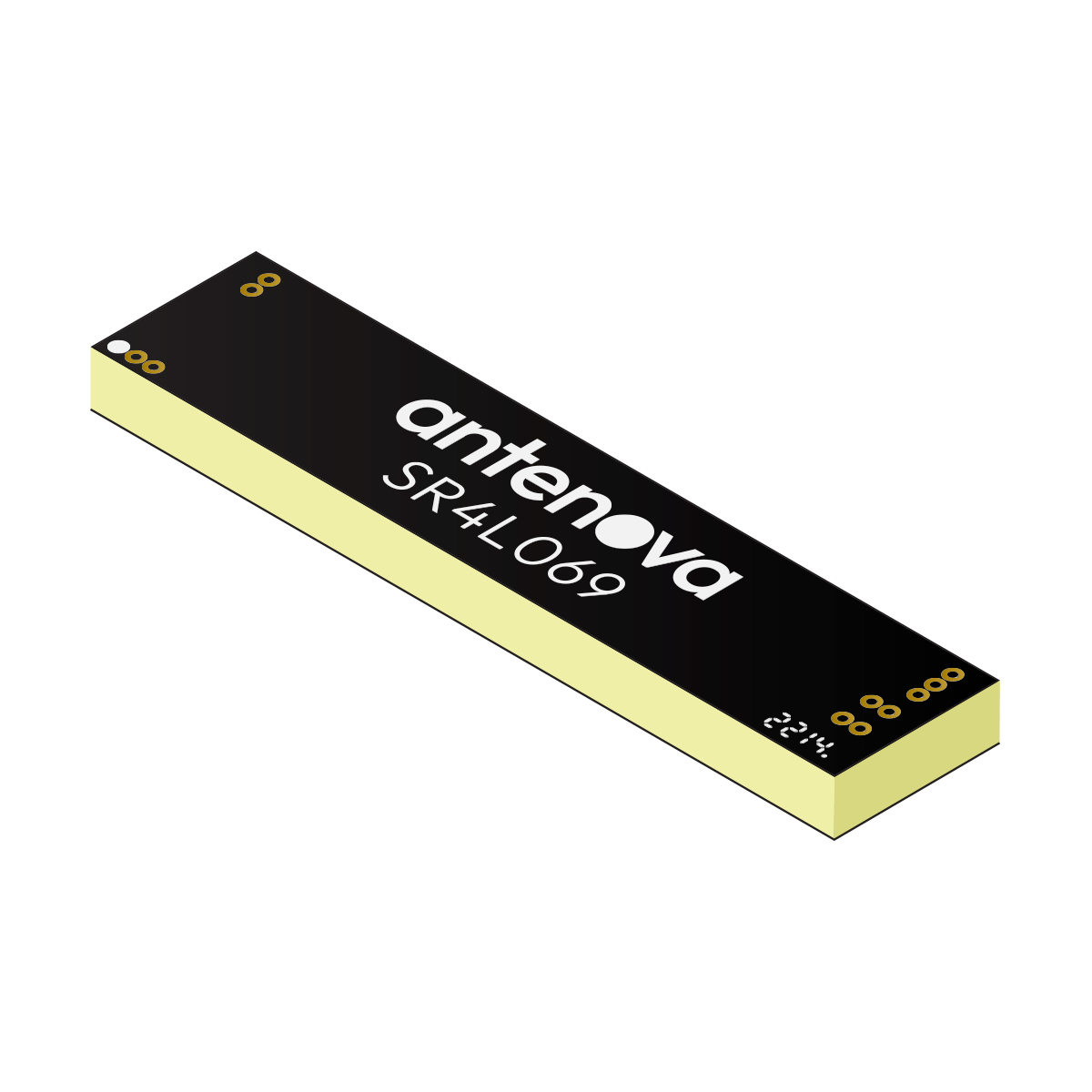
Surface mounted antennas (SMD) are a form of embedded antenna that is mounted directly onto the host PCB alongside other components. SMD chip antennas are simple to integrate with low part cost and compact size, as well as being suitable for high-volume manufacturing using pick-and-place machinery. These enable simple integration and manufacturing for compact IoT devices.
FPC/PCB
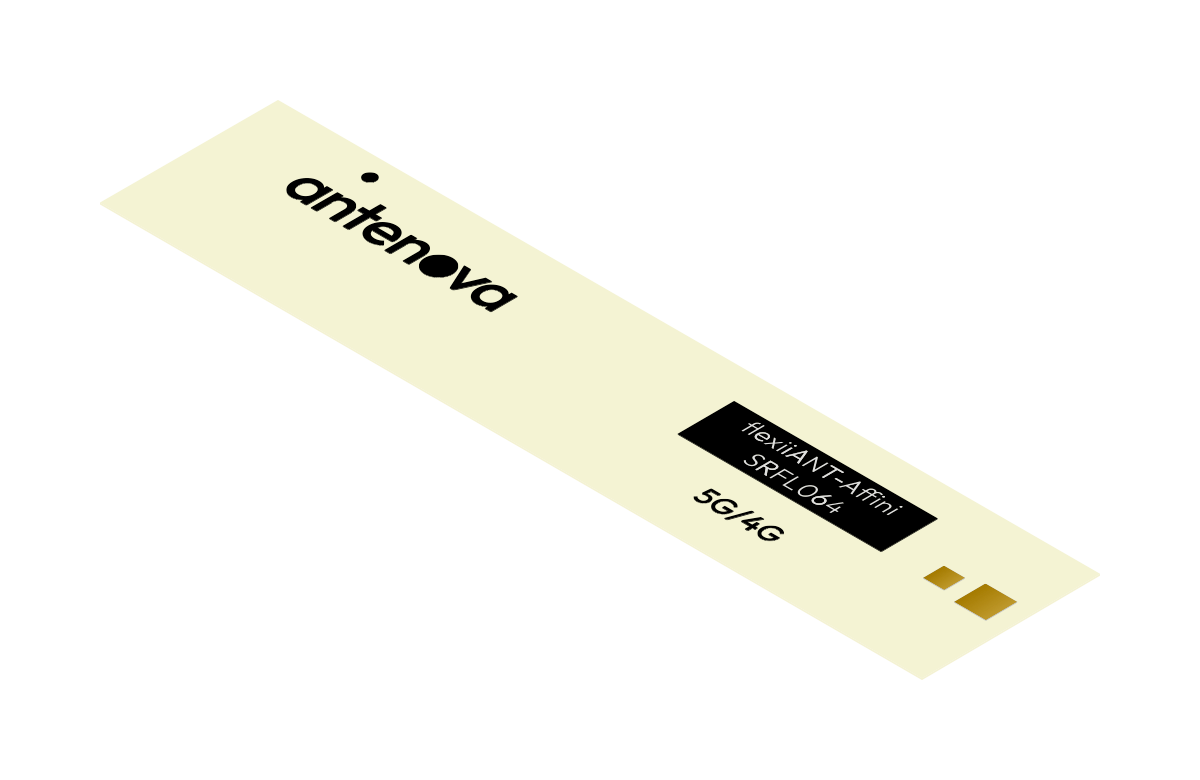
Flexible printed circuit (FPC) and PCB antennas have their own ground plane on the antenna, along with an adhesive strip that can be placed on the inside of the product housing. FPC antennas are unique in that their surface is malleable, allowing them to be placed on curved surfaces. This solves ground plane and interference complications through being placed away from PCB components. For standard and curved IoT devices with limited PCB space, PCB/FPC solutions are perfect.
Discover our antennas
We offer a range of antennas that operate on the various LPWAN networks and exhibit impressive efficiency, range, and size.
Allani (SMD)
Allani is a multiband SMD antenna that exhibits high performance and efficiency. It has dimensions of 45.0 x 10.0 x 3.3 (mm), is easy to integrate into designs, and is suitable for mass production.